Gallbladder Removal Surgery (Cholecystectomy)
A comprehensive guide to gallbladder removal — understanding laparoscopic vs. open approaches, symptoms, costs, recovery, and what to expect.
Gallbladder Removal Surgery (Cholecystectomy)
A comprehensive guide to gallbladder removal — understanding laparoscopic vs. open approaches, symptoms, costs, recovery, and what to expect.
Medically Reviewed ByDr. KOKKONDA PAVAN KUMARLast updated: 16 July 2026
232+
Cases Reported Annually in Hyderabad
(per 1 Lakh Population)
Free Second Opinion
Get connected with a trusted doctor for an expert second opinion through our care team—at no cost.
Symptoms and Signs of Gallbladder Disease
Gallbladder disease often begins silently — many people discover gallstones only on a routine ultrasound. When symptoms appear, they usually follow meals, especially fatty or heavy food, and may include sudden upper abdominal pain in the right upper abdomen or centre of the belly, sometimes spreading to the right shoulder or back.
The most characteristic symptom is biliary colic — intense pain lasting 30 minutes to several hours, often with nausea, vomiting, bloating, or feeling uncomfortably full after eating.
Acute cholecystitis presents with persistent pain, fever, and tenderness over the gallbladder (Murphy's sign). Jaundice, dark urine, or pale stools suggest a stone blocking the bile duct.
If you develop severe constant pain with high fever, yellowing of skin or eyes, or pain so intense you cannot find a comfortable position, seek emergency medical care immediately.

Common Conditions Treated
- Cholelithiasis (Gallstones): Solid deposits in the gallbladder that can block bile flow and cause pain.
- Acute Cholecystitis: Sudden inflammation of the gallbladder, usually from a blocked cystic duct.
- Chronic Cholecystitis: Repeated episodes of irritation leading to a scarred, stiff gallbladder.
- Choledocholithiasis: Gallstones that have migrated into the common bile duct.
- Gallstone Pancreatitis: A stone blocking the pancreatic duct, causing severe abdominal pain.
- Biliary Dyskinesia: Abnormal gallbladder emptying causing pain without visible stones.

What is Gallbladder Disease?
Gallbladder disease refers to problems caused by gallstones, gallbladder inflammation, or bile flow obstruction. The gallbladder stores and concentrates bile; when stones form or the wall becomes inflamed, digestion — especially of fatty meals — triggers pain and complications.

Causes of Gallbladder Disease
Gallstones form when bile chemistry is unbalanced — too much cholesterol or bilirubin, or the gallbladder does not empty properly. Risk is often summarised by the classic '4 F's': Female, Forty, Fertile, and Fair (light-skinned).
- Diet & Weight: High-fat, low-fibre diets, rapid weight loss, or prolonged fasting increase stone formation.
- Metabolic Factors: Obesity, metabolic syndrome, and type 2 diabetes alter bile composition.
- Hormonal Influences: Female sex, pregnancy, and hormone therapy increase gallstone risk.
- Genetics: Family history of gallstones significantly raises individual risk.
- Medical Conditions: Liver disease, haemolytic anaemias, and certain medications affect bile production.

The Hyderabad Lifestyle Matrix: Why Gallbladder Disease Is Rising
Hyderabad's rapid urbanisation, expanding IT workforce, rising obesity, and increasing prevalence of diabetes have created an environment where gallstone disease is becoming increasingly common. These metabolic and lifestyle changes alter bile composition and gallbladder function, increasing the likelihood of symptomatic gallstones that require laparoscopic cholecystectomy.
1. Lifestyle & Nutrition Metrics: Urban Diet and Gallstone Formation
Modern dietary patterns significantly influence gallstone formation by increasing cholesterol concentration in bile and reducing normal gallbladder emptying.
High-Calorie Urban Diet
The Data: Hyderabad has one of India's largest urban working populations, with a substantial proportion employed in IT and service industries. National dietary surveys show that urban households consume considerably more processed foods, refined carbohydrates, saturated fats, and restaurant meals than rural households. Hyderabad's food culture—including biryanis, fried snacks, bakery products, and late-night dining—further increases exposure to calorie-dense meals.
The Gallbladder Link: Frequent intake of high-fat meals increases cholesterol secretion into bile. When bile becomes supersaturated with cholesterol, crystals form and gradually develop into gallstones. Large fatty meals can also trigger painful gallbladder contractions when stones obstruct the cystic duct.
Sedentary Lifestyle & Obesity
The Data: NFHS findings indicate that nearly one in two adults living in urban Telangana are overweight or obese, with prevalence consistently higher than the national average. Hyderabad's large IT corridor contributes to prolonged sitting, reduced daily physical activity, and increasing metabolic syndrome among working-age adults.
The Gallbladder Link: Obesity increases hepatic cholesterol production, resulting in cholesterol-rich bile. Excess abdominal fat also reduces gallbladder emptying efficiency, allowing bile to stagnate and stones to develop over time.
2. Metabolic Health Metrics: Diabetes, Insulin Resistance & Gallstone Risk
Gallstone disease is closely linked with metabolic disorders. Hyderabad's growing burden of diabetes and insulin resistance contributes significantly to gallbladder dysfunction and increases the likelihood of requiring surgical treatment.
What is Gallbladder removal surgery?
Gallbladder removal surgery, medically known as a cholecystectomy, is one of the most safe and common general surgical procedures performed globally. While most cases are performed using keyhole (laparoscopic) techniques, traditional open surgery remains a reliable method when severe inflammation or complex anatomy is present.
Outcomes are highly successful, with a 95%+ success rate in resolving gallstone-related pain and preventing recurrence. Most patients return to normal activities within 1–2 weeks.

Do You Really Need Surgery?
Not every gallstone needs surgery. Silent stones found on routine scans may be watched if they never cause symptoms. However, once gallstones cause pain or complications, surgery is the definitive treatment. Your doctor will recommend cholecystectomy based on:
- Your symptoms: Recurrent biliary colic, acute cholecystitis, or pain affecting quality of life strongly favour surgery.
- Complications: Gallstone pancreatitis, bile duct stones, or suspected gallbladder cancer require prompt surgical evaluation.
- Your overall health: Elective laparoscopic surgery in a stable patient is safer than waiting for an emergency with dense inflammation.
What Happens if You Delay Treatment?
If you have symptomatic gallstones, delaying cholecystectomy increases the chance of emergency complications. Go to the nearest emergency room immediately if you notice:
- Severe, constant upper abdominal pain lasting more than 6 hours.
- High fever with shaking chills and worsening abdominal tenderness.
- Yellowing of skin or eyes, dark urine, or clay-coloured stools.
- Persistent vomiting or inability to keep fluids down.
- Pain so severe you cannot stand straight or find a comfortable position.
The risks of delaying treatment for symptomatic gallbladder disease include:
- Repeated Painful Attacks: Unpredictable biliary colic limiting diet, travel, and daily life.
- Acute Cholecystitis: Emergency admission, IV antibiotics, and higher-risk surgery.
- Gangrenous or Perforated Gallbladder: Tissue death and bile leakage — a surgical emergency.
- Bile Duct Blockage: Jaundice, cholangitis (bile duct infection), or pancreatitis.
- Emergency Surgery: Higher complication rates than planned elective laparoscopic removal.

Know Your Insurance Benefits
Get clarity on your insurance coverage before your treatment, with guidance from our care team every step of the way.
Check My Insurance BenefitsTypes of Procedures for Gallbladder Disease
Gallbladder problems are treated with surgical removal or, in select duct-stone cases, endoscopic clearance. The best option depends on symptoms, anatomy, and overall health.
1. Laparoscopic Cholecystectomy
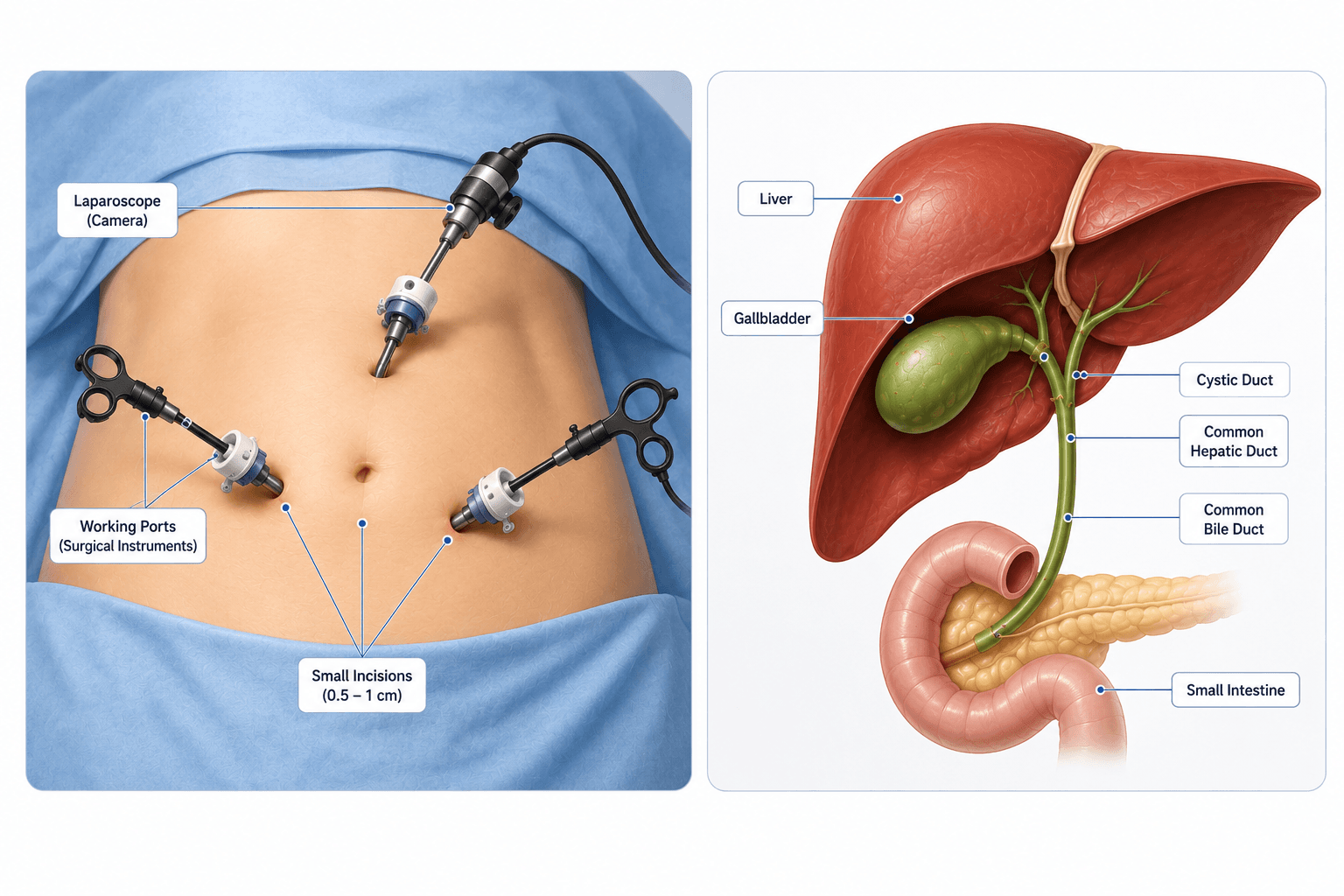
The preferred approach for most patients. Three to four tiny incisions, camera-guided dissection using the critical view of safety, and same-day or overnight discharge for uncomplicated cases.
2. Single-Incision Laparoscopic Surgery (SILS)
A variation where all instruments pass through one umbilical incision for better cosmesis. Not suitable for all patients; outcomes depend on surgeon experience.
3. Open Cholecystectomy
A single larger incision under the right rib cage. Used when laparoscopy is unsafe, anatomy is severely scarred, or during emergency surgery with dense inflammation.
4. ERCP (Endoscopic Stone Removal)
Not gallbladder removal — a scope through the mouth removes bile duct stones. Often combined with laparoscopic cholecystectomy to prevent recurrence.

Comparison of Treatment Options
Doctor's Recommendation
For most people with painful or complicated gallstones, laparoscopic cholecystectomy is the recommended definitive treatment. ERCP is added when bile duct stones are present. Open surgery is reserved for cases where laparoscopy cannot be performed safely.
Preparing for Laparoscopic Cholecystectomy
Before clearing you for surgery, your doctor will order standard tests:
- Abdominal Ultrasound: Confirms stones, wall thickness, and duct dilation.
- Liver Function Tests (LFT): Checks bile duct involvement and liver health.
- Complete Blood Count (CBC): Checks for infection or anaemia.
- ECG and Chest X-ray: Standard pre-anaesthesia workup if over 40 or at cardiac risk.
- MRCP or ERCP: If bile duct stones are suspected.
Tell your surgeon about all medications, vitamins, and supplements:
- Blood Thinners: Aspirin, clopidogrel, or warfarin usually stopped 5–7 days before surgery.
- Diabetes Medications: Dosage adjusted on the morning of surgery due to fasting.
- Blood Pressure Medications: Most taken on surgery morning with a small sip of water — follow your doctor's instructions.
To optimise healing before surgery:
- Diet: Eat a low-fat diet for several days before surgery to reduce gallbladder irritation.
- Smoking: Quit or cut back at least two weeks before surgery.
- Fasting: No food or drink for 6–8 hours before anaesthesia.
What Happens on the Day of Surgery?
On admission:
- Nurse verifies fasting status, vitals, and consent forms.
- IV line placed for fluids and antibiotics.
- Surgical site marked; abdomen prepared.
- Anaesthesiologist reviews history and explains general anaesthesia.
Typical steps during laparoscopic cholecystectomy:
- Anaesthesia: General anaesthesia puts you to sleep painlessly.
- Incisions: Small ports placed; abdomen inflated with CO₂ gas.
- Critical View of Safety: Surgeon identifies cystic duct and artery before clipping.
- Removal: Gallbladder dissected and removed in a retrieval bag.
- Closure: Gas released; incisions closed with stitches or glue.
In recovery:
- Monitored until fully awake; shoulder-tip pain from residual gas is common and temporary.
- Sips of water when tolerated; light diet within hours for most patients.
- Encouraged to walk the same day to prevent clots and gas discomfort.
- Discharged when pain is controlled, you can walk, and you have passed urine.
Before and After Cholecystectomy

How is Laparoscopic Cholecystectomy Performed?
While gallbladder removal can be done via open surgery, the vast majority are performed laparoscopically. Below is the step-by-step phase flow for a standard laparoscopic removal:
Phase 1
Phase 1
Anaesthesia & Setup
Anaesthesia: General anaesthesia ensures you feel no pain during the procedure.
Positioning: You lie on your back; the team prepares sterile instruments and ports.
Phase 2
Phase 2
Dissection & Critical View
The surgeon identifies and secures key structures before removal.
Camera Insertion: A laparoscope provides a magnified view of the gallbladder and bile duct.
Critical View of Safety: Only the cystic duct and artery are visible before clipping — the gold standard for preventing bile duct injury.
Phase 3
Phase 3
Gallbladder Removal
The gallbladder is separated from the liver and extracted.
Dissection: Gallbladder carefully separated from the liver bed.
Extraction: Placed in a retrieval bag and removed through a port site.
Phase 4
Phase 4
Closure & Recovery
Finalising the procedure and beginning recovery.
Inspection: Bleeding checked; bile duct integrity confirmed.
Closure: Ports closed with dissolvable stitches or glue; you wake in recovery.
How Long Does Laparoscopic Cholecystectomy Take?
Uncomplicated laparoscopic cholecystectomy usually takes 45 to 90 minutes. Inflamed or scarred cases may take longer; conversion to open surgery adds time but is done only for safety.

Expert Guidance, Every Step of the Way
Our dedicated care coordinators are here to answer your questions and guide you through every stage of your treatment.
Talk to Our ExpertsRisks and Complications of Laparoscopic Cholecystectomy
Cost of Laparoscopic Cholecystectomy in India
The cost varies by city, hospital tier, whether the case is elective or emergency, and if ERCP is needed for bile duct stones.
Estimated Cost in Hyderabad
What Does the Cost Usually Include?
- Surgeon's fees and surgical team charges.
- Anaesthesiologist's consultation and fee.
- Operating theater (OT) charges and laparoscopic equipment usage.
- Standard hospital room rent for the planned stay duration.
- In-hospital medications, IV fluids, and consumable items used during surgery.
- Routine post-operative nursing care.
Additional Charges May Include
- Pre-operative ultrasound, blood tests, and ECG.
- ERCP or MRCP for bile duct stones.
- Upgrade to a private or deluxe single room.
- Emergency surgery premium vs planned elective case.
- Medicines prescribed to be taken at home after discharge.
Is It Covered by Insurance?
Yes. Symptomatic gallstone disease and cholecystitis are medically necessary procedures covered by most health insurance policies in India.
- Pre-authorization: For planned surgery, submit pre-auth 3–5 days before admission for cashless treatment.
- Waiting Periods: New policies may have a 2–4 year waiting period for gallstone surgery; corporate policies often waive this.
- Co-payment and Deductibles: Check room-rent limits and co-pay clauses in your policy.
- Emergency Admissions: May require deposit with reimbursement later if pre-auth was not obtained.
Recovery Timeline After Laparoscopic Cholecystectomy
Postoperative Care
Caring for yourself at home is essential for a smooth recovery:
- Wound Care: Keep incisions clean and dry. No soaking baths or swimming until wounds are fully closed (~2 weeks).
- Diet: Start with bland, low-fat foods; gradually reintroduce normal diet. Avoid very greasy meals for the first few weeks.
- Activity: Walk daily from day one. No lifting more than 5 kg for 2 weeks; 10 kg for 4–6 weeks.
- Driving: When you can brake suddenly without pain — usually 5–7 days.
Before discharge, the hospital team will:
- Monitor vitals and pain levels in the recovery room.
- Explain wound care and signs of infection.
- Provide pain medication prescription.
- Confirm you can walk and tolerate oral intake.
Follow-Up Visits After Laparoscopic Cholecystectomy
You will typically need to see your surgeon for follow-up visits after cholecystectomy:
- First Visit (7 to 10 days after surgery): Wound check; stitches removed if non-dissolvable.
- Second Visit (4 to 6 weeks after surgery): Confirm full recovery and clear for strenuous activity.
Warning Signs to Watch After Laparoscopic Cholecystectomy
While complications are rare, monitor your body closely. Contact your surgeon or visit the hospital immediately if you notice any of these signs:
- Fever above 101°F (38.3°C) or worsening abdominal pain.
- Yellow skin or eyes, dark urine, or pale stools.
- Increasing redness, pus, or foul smell from incisions.
- Persistent vomiting or inability to eat for more than 24 hours.
- Severe shoulder or abdominal pain not relieved by prescribed medicines.
- Shortness of breath, chest pain, or calf swelling.
- Inability to urinate within 8 to 12 hours after returning home.

Recent Clinical Studies Redefining Cholecystectomy Care
Over the past few years, advances in minimally invasive surgery, international guideline updates, and large multicentre trials have refined when gallbladder surgery should be performed, how surgeons can minimise bile duct injuries, and which patients can safely undergo same-day discharge.
Questions to Ask Your Surgeon
Being an active participant in your healthcare is important. Here are 10 highly useful questions to ask your surgeon during your consultation:
- Do I definitely need surgery, or can we watch and wait?
- Are there stones in my bile duct? Will I need ERCP before or after surgery?
- Which surgical method do you recommend for me, and why?
- What is your conversion rate to open surgery?
- Can this be done as same-day surgery, or will I need to stay overnight?
- How much experience do you have performing laparoscopic cholecystectomy?
- How soon can I return to work and exercise?
- What diet changes should I expect long term without a gallbladder?
- Will my health insurance cover the entire cost for cashless treatment?
- What should I do if I experience sudden pain or fever after surgery?
Frequently Asked Questions about Laparoscopic Cholecystectomy
Can I live a normal life without a gallbladder?
Yes. The liver produces bile continuously; without a gallbladder, bile flows directly into the intestine. Most people digest food normally after a short adjustment period.
Is laparoscopic gallbladder removal safe?
It is one of the most commonly performed surgeries worldwide with a high safety profile when done by an experienced surgeon. Serious complications are uncommon.
How painful is laparoscopic cholecystectomy?
Most patients describe mild to moderate incision pain for 3–5 days, plus temporary shoulder discomfort from gas. Pain is usually well controlled with oral medicines.
When can I eat normally after surgery?
Many people eat light food the same day. Return to a regular diet within a week, avoiding very fatty meals initially.
Will gallstones come back after surgery?
No. Once the gallbladder is removed, gallstones cannot form in it again. Rarely, stones can form in the bile duct — a separate condition managed with ERCP.
What is the difference between laparoscopic and open cholecystectomy?
Laparoscopic uses small incisions and faster recovery. Open surgery uses one larger cut and is reserved for difficult or emergency cases.
How much does gallbladder surgery cost in India?
Elective laparoscopic cholecystectomy typically ranges from about ₹40,000 in smaller hospitals to ₹2,50,000+ in premium corporate hospitals, depending on city and complexity.
Is gallbladder surgery covered by insurance?
Yes, for symptomatic gallstone disease and cholecystitis it is usually covered as a medically necessary procedure after policy waiting periods.
What is the critical view of safety?
A surgical technique where the surgeon clears fatty tissue to see only two structures entering the gallbladder before clipping — the gold standard for preventing bile duct injury.
Can I travel after gallbladder surgery?
You can travel as a passenger within a few days. Avoid long flights or road trips for at least 2 weeks to prevent blood clots and discomfort.
When can I start exercising again?
Light walks start immediately. Light cardio can resume after 2–3 weeks. Avoid heavy weight training for at least 4–6 weeks.
Will I need a special diet forever?
Most people return to a normal diet. Some find very fatty meals cause loose stools temporarily; eating smaller, lower-fat meals helps during adjustment.
Can gallbladder surgery be done during pregnancy?
If possible, surgery is deferred until after delivery. If cholecystitis occurs during pregnancy, laparoscopic cholecystectomy in the second trimester is considered safe by most guidelines.
What causes shoulder pain after laparoscopic surgery?
Residual CO₂ gas irritates the diaphragm, causing referred pain to the right shoulder. It is harmless and resolves within 24–48 hours with walking and movement.
What happens if the surgeon converts to open surgery?
Conversion means laparoscopy could not be completed safely. Open cholecystectomy through a larger incision is a standard, safe alternative with a longer recovery.
Find the Right Specialist for Laparoscopic Cholecystectomy
Why Choose SPEROW?
Laparoscopic cholecystectomy is performed by General Surgeons with laparoscopic training. SPEROW connects you with verified, experienced specialists who regularly perform cholecystectomy, affiliated with hospitals that have dedicated surgical departments and bile duct injury support.
- Board-certified General Surgeons with verified credentials.
- High-volume laparoscopic cholecystectomy experience.
- Affiliated with hospitals offering 24/7 emergency and ERCP support.
- Transparent cost ranges and insurance navigation support.
- Post-operative care coordination through your dedicated SPEROW CareBuddy.

KOKKONDA PAVAN KUMAR
VerifiedGeneral Surgery
Experience: 8+ Yrs
Hospital: Renova Neelima
Languages: Eng
Advanced Surgical Care
Book ConsultationView Profile 
Shirisha Musini
VerifiedGeneral Surgery
Experience: 16+ Yrs
Hospital: Renova Neelima
Languages: Eng
Advanced Surgical Care
Book ConsultationView Profile 
Y B Reddy
VerifiedGeneral Surgery
Experience: 15+ Yrs
Hospital: Renova Neelima
Languages: Eng
Advanced Surgical Care
Book ConsultationView Profile
Find a Surgeon You Can Trust
We'll connect you with an experienced specialist who matches your condition, treatment needs, and preferences.
Find the Right SurgeonFree Consultation
FreeGet connected with a trusted doctor for an expert second opinion through our care team.
No Cost Expert Guidance · Coordinated Care · Personalized Support