Elbow Bursectomy Surgery
Elbow Bursectomy is a procedure to remove an inflamed or infected fluid-filled sac (called the bursa) at the tip of your elbow. The bursa normally acts as a smooth cushion over the bone, but when it becomes swollen, painful, or filled with excess fluid from friction or infection, non-surgical treatments may not be enough. During surgery, the doctor removes the swollen sac through a small incision. Over time, a new, healthy bursa naturally grows back in its place, relieving pain and restoring comfortable arm movement.
Elbow Bursectomy Surgery
Elbow Bursectomy is a procedure to remove an inflamed or infected fluid-filled sac (called the bursa) at the tip of your elbow. The bursa normally acts as a smooth cushion over the bone, but when it becomes swollen, painful, or filled with excess fluid from friction or infection, non-surgical treatments may not be enough. During surgery, the doctor removes the swollen sac through a small incision. Over time, a new, healthy bursa naturally grows back in its place, relieving pain and restoring comfortable arm movement.
Medically Reviewed ByDr Radhakrishna Rao Sagi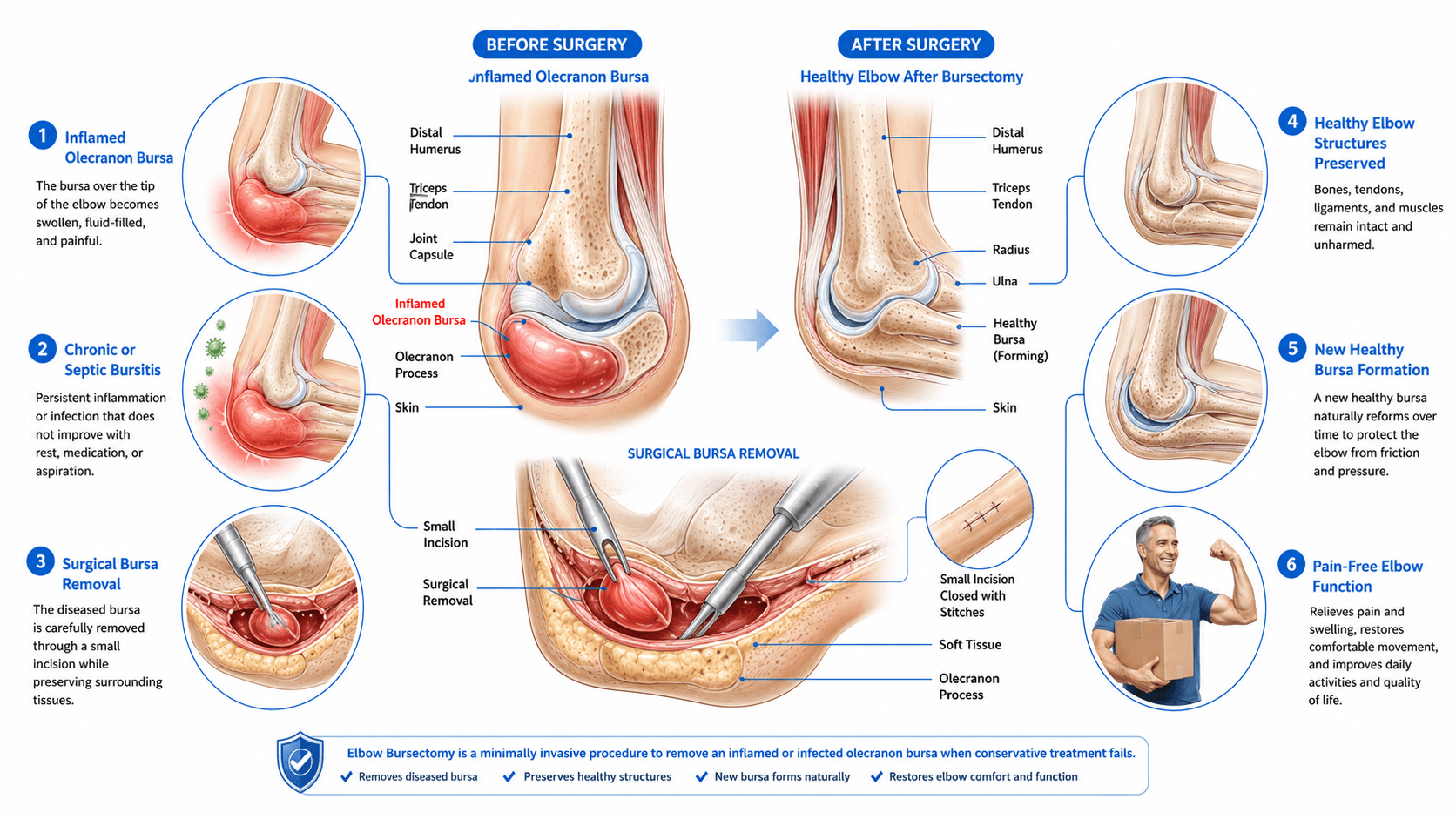
Free Second Opinion
Get connected with a trusted doctor for an expert second opinion through our care team—at no cost.
Symptoms and Signs of Bursectomy (Elbow)
Olecranon bursitis usually develops over the tip of the elbow, sometimes gradually from repeated pressure and sometimes suddenly after trauma or infection. Swelling is the most visible feature, but pain, redness, and reduced function may all prompt surgical evaluation when they persist despite treatment.
- A visible lump or swelling over the tip of the elbow that may enlarge progressively or recur after aspiration.
- Pain when leaning on the elbow, during elbow movement, while lifting objects, or during work and sports.
- Redness and warmth over the swelling, which are particularly concerning for infection and need prompt evaluation.
- Fluid leakage, drainage from the skin, or persistent wound openings over the bursa.
- Reduced elbow function, with difficulty bending the elbow, leaning on hard surfaces, or participating in sport and work.
- Fever with a red, warm, painful swelling, which may indicate septic (infected) bursitis requiring urgent care.