Rotator Cuff Repair Surgery
Rotator Cuff Repair is a surgery to fix torn tendons in the shoulder that connect your muscles to the arm bone. When these tendons are torn from injury or wear and tear, it can cause severe pain, weakness, and make it hard to lift your arm. The surgeon reattaches the torn tendon back to the bone—often using tiny keyhole cuts and a mini camera—so your shoulder can heal, regain its strength, and move pain-free again.
Rotator Cuff Repair Surgery
Rotator Cuff Repair is a surgery to fix torn tendons in the shoulder that connect your muscles to the arm bone. When these tendons are torn from injury or wear and tear, it can cause severe pain, weakness, and make it hard to lift your arm. The surgeon reattaches the torn tendon back to the bone—often using tiny keyhole cuts and a mini camera—so your shoulder can heal, regain its strength, and move pain-free again.
Medically Reviewed ByDr Radhakrishna Rao Sagi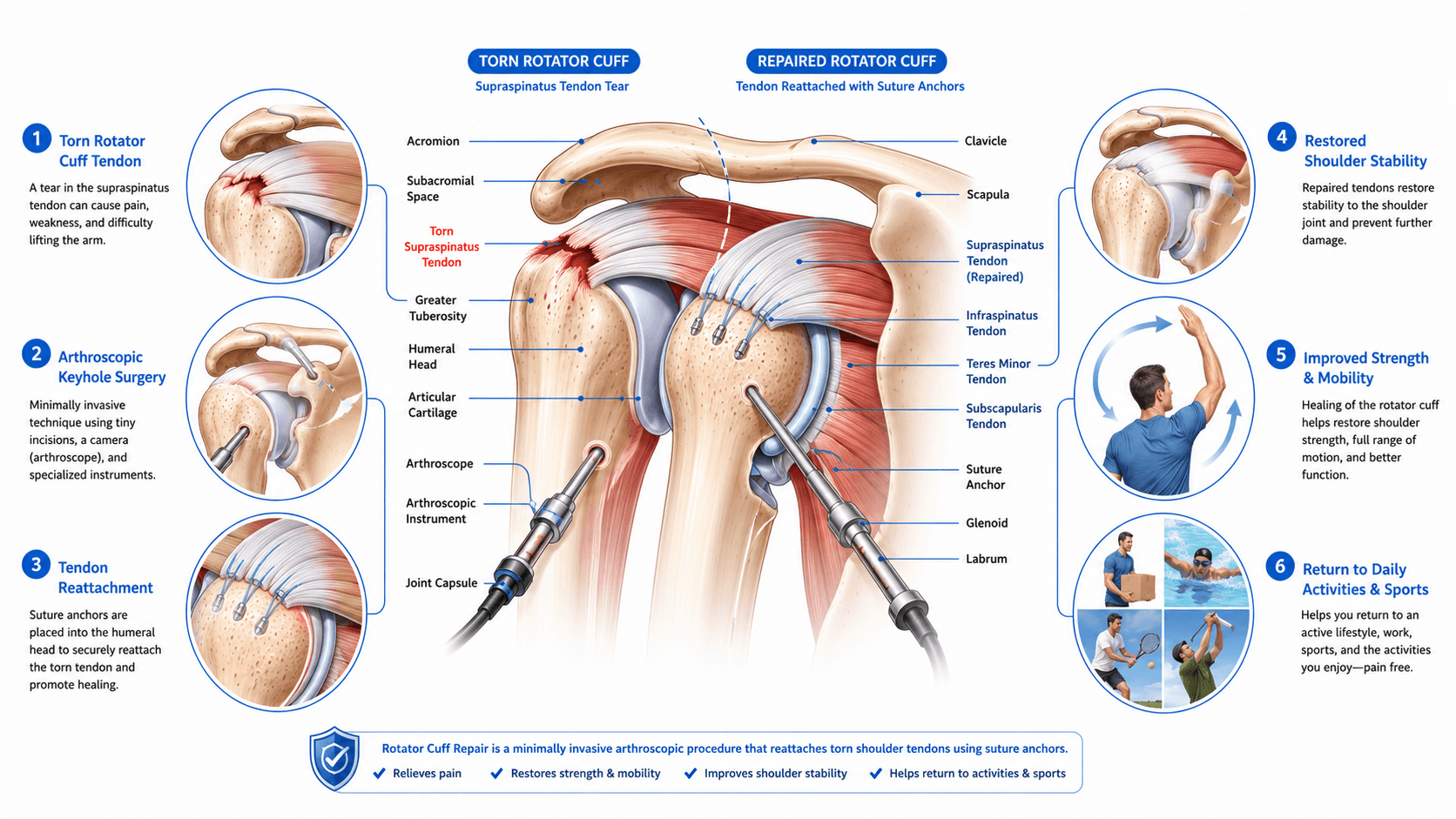
Free Second Opinion
Get connected with a trusted doctor for an expert second opinion through our care team—at no cost.
Symptoms and Signs of Rotator Cuff Repair
Symptoms vary depending on the size, chronicity, and cause of the tear. Some tears occur suddenly after trauma, while others develop gradually from degeneration. Night pain that disrupts sleep is one of the most common reasons patients seek medical care.
- Pain over the outer shoulder that may radiate down the upper arm, often worse during overhead activities.
- Night pain, especially when lying on the affected shoulder, that disrupts sleep.
- Weakness and difficulty lifting the arm, reaching overhead, carrying groceries, or placing objects on shelves.
- Reduced range of motion, with difficulty combing hair, fastening clothing behind the back, or rotating the shoulder.
- Clicking, grinding, or catching sensations during shoulder movement.
- Functional limitations with driving, dressing, sleeping comfortably, household chores, and overhead work.