Shoulder Arthroscopy
Shoulder Arthroscopy is a minimally invasive keyhole procedure used to check and treat joint issues inside the shoulder, such as torn cartilage, inflammation, or bone spurs. Through tiny cuts about the size of a buttonhole, the surgeon inserts a pencil-sized camera (arthroscope) to view the joint clearly on a video screen and use mini instruments to fix damaged tissue. Because it avoids open incisions, recovery involves less pain, minimal scarring, and a quicker return to normal daily arm movements.
Shoulder Arthroscopy
Shoulder Arthroscopy is a minimally invasive keyhole procedure used to check and treat joint issues inside the shoulder, such as torn cartilage, inflammation, or bone spurs. Through tiny cuts about the size of a buttonhole, the surgeon inserts a pencil-sized camera (arthroscope) to view the joint clearly on a video screen and use mini instruments to fix damaged tissue. Because it avoids open incisions, recovery involves less pain, minimal scarring, and a quicker return to normal daily arm movements.
Medically Reviewed ByDr Radhakrishna Rao Sagi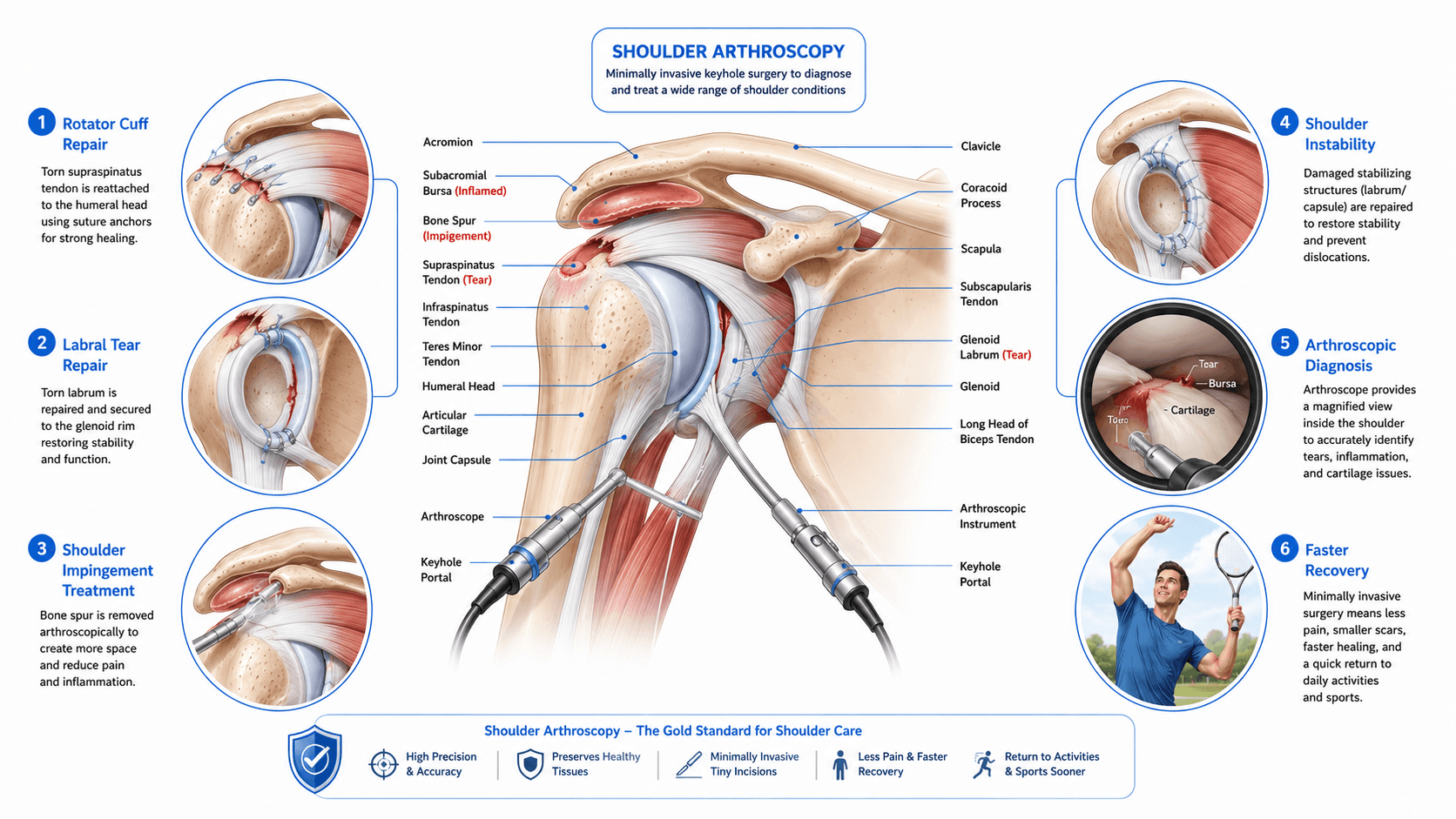
Free Second Opinion
Get connected with a trusted doctor for an expert second opinion through our care team—at no cost.
Symptoms and Signs of Shoulder Arthroscopy
Shoulder arthroscopy is considered when shoulder symptoms persist despite conservative treatment or when an injury requires surgical repair. The symptoms below commonly prompt evaluation and, when structural damage is confirmed, arthroscopic treatment.
- Persistent shoulder pain, night pain, and pain during overhead activities or while lifting objects.
- Weakness with difficulty lifting the arm, throwing, carrying objects, or participating in sports.
- Shoulder instability - slipping, recurrent dislocations, or a feeling that the shoulder may "give way".
- Clicking, locking, catching, or grinding sensations during movement.
- Reduced range of motion, with difficulty reaching overhead, reaching behind the back, dressing, or combing hair.
- Localized swelling, joint inflammation, and tenderness around the shoulder.