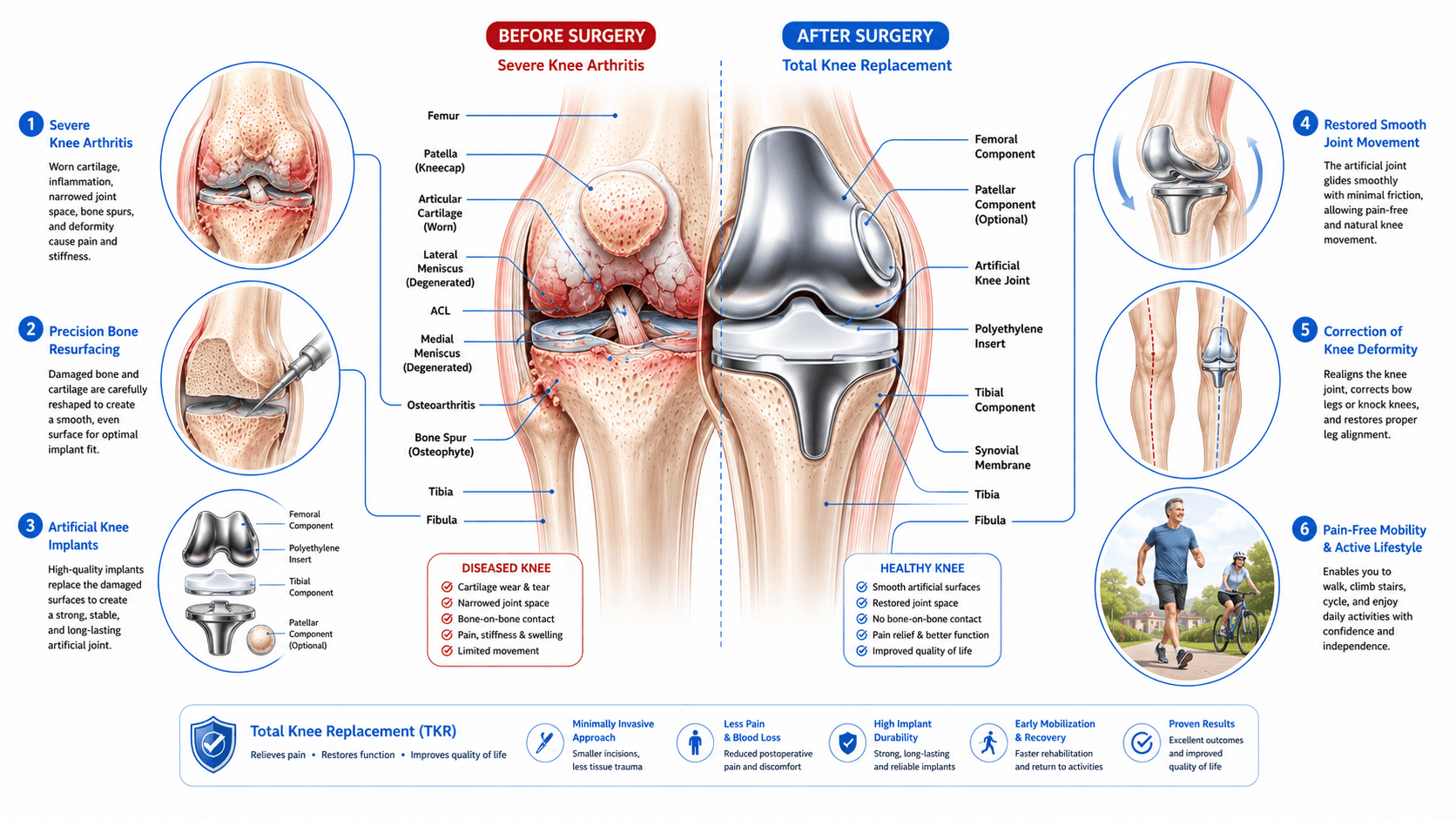
Total Knee Replacement is a common procedure to resurface a severely damaged or arthritic knee joint, relieving chronic pain and making daily movement easier. During the surgery, the doctor removes worn-out bone and cartilage from the ends of your thighbone and shinbone, replacing them with smooth, high-grade metal and durable plastic components. This acts as a brand-new cushion for the joint, restoring stability, eliminating bone-on-bone friction, and helping you walk, climb stairs, and stay active comfortably again.
Total Knee Replacement is a common procedure to resurface a severely damaged or arthritic knee joint, relieving chronic pain and making daily movement easier. During the surgery, the doctor removes worn-out bone and cartilage from the ends of your thighbone and shinbone, replacing them with smooth, high-grade metal and durable plastic components. This acts as a brand-new cushion for the joint, restoring stability, eliminating bone-on-bone friction, and helping you walk, climb stairs, and stay active comfortably again.
Patients who eventually require Total Knee Replacement often experience symptoms that progressively worsen over several years. The most common warning signs include persistent knee pain during walking, climbing stairs, or standing, pain at rest or during the night, and morning stiffness lasting more than 30 minutes.
Persistent knee pain during walking, climbing stairs, or standing.
Pain at rest or during the night that interrupts sleep.
Morning stiffness lasting more than 30 minutes.
Swelling that repeatedly returns despite treatment.
Reduced range of knee movement and grinding, clicking, or creaking sensations (crepitus).
Bow-legged or knock-kneed deformity, and difficulty sitting, squatting, or getting up from a chair.
Dependence on walking aids because of pain or instability, and failure of medications, injections, physiotherapy, or weight loss to relieve symptoms.
Search...
What is Total Knee Replacement?
Knee osteoarthritis is a progressive degenerative joint disease in which the smooth articular cartilage covering the ends of the femur, tibia, and patella gradually wears away. As cartilage deteriorates, the bones begin to rub against each other, leading to chronic pain, stiffness, swelling, inflammation, and loss of joint function. It is the underlying cause in more than 90% of Total Knee Replacements.
Types of Conditions Requiring Total Knee Replacement
Advanced Knee Osteoarthritis: Age-related wear and tear that gradually destroys joint cartilage - the leading indication for knee replacement.
Rheumatoid Arthritis: A chronic autoimmune disease where inflammation destroys cartilage, bone, and ligaments, often affecting both knees at a younger age.
Post-Traumatic Arthritis: Joint damage following fractures, ACL/PCL injuries, meniscal tears, or ligament injuries that alter knee mechanics.
Osteonecrosis (Avascular Necrosis): Interrupted blood supply causes bone tissue to die and the joint surface to collapse.
Severe Knee Deformity: Varus (bow legs) or valgus (knock knees) deformity that worsens joint wear and walking efficiency.
Severe Cartilage Degeneration: Diffuse cartilage destruction affecting multiple compartments of the knee, causing painful bone-on-bone contact.
Causes of Total Knee Replacement
Cartilage Wear from Aging: The risk of osteoarthritis rises significantly after the age of 50 as cartilage gradually loses its ability to repair itself. As the body ages, the joint lining becomes inflamed, bone spurs (osteophytes) form, and the cushioning effect of cartilage is progressively lost.
Obesity: One of the strongest modifiable risk factors. Every additional kilogram of body weight increases the load across the knee joint by approximately 3-4 kilograms during walking, accelerating cartilage breakdown.
Previous Knee Injury: A history of ACL tears, meniscal injuries, fractures, or ligament damage substantially raises the risk of post-traumatic osteoarthritis.
Genetics: A family history of osteoarthritis can increase susceptibility through inherited differences in cartilage structure, bone shape, and inflammatory responses.
Occupation and Lifestyle: Jobs involving frequent kneeling, squatting, heavy lifting, or repetitive impact - as well as a sedentary lifestyle that weakens supporting muscles - place greater mechanical stress on the knee over many years.
Metabolic Conditions: Diabetes, metabolic syndrome, and chronic low-grade inflammation are associated with faster progression of osteoarthritis and poorer joint health.
What is Total Knee Replacement?
Total Knee Replacement (TKR), also known as Total Knee Arthroplasty (TKA), is a highly successful orthopedic procedure that replaces the damaged surfaces of the knee joint with artificial implants made from metal alloys, high-grade medical plastics, and, in some designs, ceramic components. Rather than replacing the entire knee, the procedure resurfaces only the damaged joint surfaces while preserving as much healthy bone and soft tissue as possible.
More than 90% of modern implants continue to function well for 15-20 years when appropriately selected and implanted.
Around 80-90% of patients report meaningful improvements in pain, function, and overall satisfaction after surgery.
Many patients begin walking within 24 hours, with recovery time and technique varying by the surgical approach chosen.
Do You Really Need Surgery?
Total Knee Replacement is generally considered when knee pain and stiffness become severe enough to interfere with everyday life and conservative treatments no longer provide adequate relief. Orthopedic surgeons do not recommend surgery based on age or X-ray findings alone. Instead, the decision is made by evaluating several factors:
Your symptoms: Severe pain that limits daily activities, persists despite medication or injections, and disturbs sleep is a strong indication for surgery.
Joint damage and function: Radiographic evidence of advanced joint degeneration, significant loss of joint function, and knee deformity that impairs walking mechanics.
Response to conservative care: When medications, physiotherapy, weight management, activity modification, walking aids, or injections have failed to restore mobility or relieve pain.
What Happens if You Delay Treatment?
Knee osteoarthritis is a progressive condition, and once cartilage has worn away the body cannot regenerate it. Postponing surgery despite severe symptoms can make both the operation and the recovery more challenging. The risks of delaying treatment include:
Progressive Cartilage Loss: Joint space continues to narrow, bones rub directly against each other, bone spurs enlarge, and knee movement becomes increasingly restricted.
Increasing Pain: Discomfort that once occurred only during activity progresses to night pain and constant pain even at rest, creating a cycle of reduced activity and muscle weakness.
Worsening Deformity and Muscle Weakness: Bow legs or knock knees worsen, and the quadriceps and supporting muscles weaken, leading to poor balance and a greater risk of falls.
More Complex Surgery: Advanced arthritis can cause greater bone loss, severe deformity, tight soft tissues, and ligament imbalance, sometimes requiring specialized implants and additional soft-tissue balancing.
Longer Recovery and Decline in Overall Health: Reduced mobility contributes to weight gain, poor cardiovascular fitness, and reduced mental well-being, while rehabilitation may take longer than in patients treated earlier.
When Should You Not Delay Treatment? (Warning Signs)
While Total Knee Replacement is usually a planned, elective procedure, certain situations call for prompt orthopedic evaluation. See your surgeon without delay if you notice any of these signs:
Constant pain even at rest or night pain that repeatedly interrupts your sleep.
Rapidly worsening bow-leg or knock-knee deformity that is changing the alignment of your leg.
Persistent swelling, warmth, and repeated fluid accumulation that does not settle with medication.
A knee that feels unstable or gives way, increasing your risk of falls.
Loss of independence - being unable to walk comfortably, work, or perform routine daily activities.
Fever associated with a red, warm, painful knee, which may signal infection and needs urgent attention.
Know Your Insurance Benefits
Get clarity on your insurance coverage before your treatment, with guidance from our care team every step of the way.
Knee replacement surgery is not a one-size-fits-all procedure. Surgeons choose the most appropriate technique after evaluating the extent of arthritis, ligament condition, bone quality, knee alignment, age, activity level, and overall health. Total Knee Replacement can be performed using three main surgical approaches.
Conventional Total Knee Replacement
This is the traditional, time-tested method. The surgeon makes an incision over the front of the knee, removes the damaged cartilage and a thin layer of bone from the femur, tibia, and (when indicated) the patella, and replaces these surfaces with precisely fitted implants, balancing the surrounding ligaments manually.
Computer-Navigated Knee Replacement
Computer-assisted navigation uses real-time tracking to guide bone cuts and implant alignment. It gives the surgeon precise measurements during surgery to improve implant positioning and restore natural knee alignment.
Robotic-Assisted Knee Replacement
Robotic-assisted surgery combines three-dimensional planning with a robotic platform to enhance bone-cut precision, implant positioning, and ligament balancing. Despite the name, the robot does not perform the surgery independently - every step remains under the complete control of the orthopedic surgeon.
Note: Current evidence suggests robotic assistance improves the accuracy of implant placement, although long-term functional outcomes remain comparable to well-performed conventional knee replacement. The choice of technique depends on clinical suitability rather than technology alone.
Comparison of Treatment Options
Treatment Option
Procedure Type
Hospital Stay
Recovery Time
Precision
Success Rate
Cost Range
Recommended For
Conventional Total Knee Replacement
Traditional open surgery with manual instrumentation
1 to 3 days
6 to 12 weeks for routine activities
High (surgeon-guided)
90%+ implant survival at 15-20 years
Affordable (Budget-friendly)
Most standard cases and patients where advanced technology is not required
Computer-Navigated Knee Replacement
Open surgery guided by computer navigation
1 to 3 days
6 to 12 weeks for routine activities
Very High (real-time tracking)
90%+ implant survival at 15-20 years
Moderate
Patients needing precise alignment or with moderate deformity
Robotic-Assisted Knee Replacement
Minimally invasive, robot-assisted with 3D planning
1 to 3 days (same-day for selected patients)
6 to 12 weeks; potentially faster early recovery
Highest (3D planning + robotic arm)
90%+ implant survival at 15-20 years
Premium (Expensive)
Complex deformities and cases needing highly precise implant positioning
Doctor's Recommendation
There is no single best knee replacement for every patient. Conventional Total Knee Replacement remains a safe, reliable, and cost-effective option for most patients. Robotic-assisted and computer-navigated techniques may offer advantages in complex deformities or when highly precise implant positioning is needed. After a detailed clinical examination and imaging studies, the orthopedic surgeon recommends the option that offers the best balance between pain relief, long-term function, implant longevity, and recovery.
Preparing for Total Knee Replacement
Before scheduling surgery, your orthopedic surgeon performs a comprehensive assessment of your overall health, knee condition, and fitness for anesthesia. Common pre-operative investigations include:
Blood Tests: Complete Blood Count (CBC), blood sugar levels, kidney and liver function tests, electrolytes, coagulation profile, and blood grouping when indicated.
Imaging Studies: Standing weight-bearing X-rays of both knees, long-leg alignment X-rays when indicated, and occasionally MRI or CT scans for robotic-assisted or complex revision surgeries.
Cardiac Assessment: Electrocardiogram (ECG), echocardiography if indicated, and cardiologist consultation for high-risk patients.
Infection Screening: Evaluation for urinary tract, dental, skin, or respiratory infections, which must be treated before surgery to protect the implant.
Tell your surgeon about all medications, vitamins, and herbal supplements you take, and follow these guidelines to optimize healing:
Blood Thinners: Anticoagulants and certain antiplatelet medications may need temporary modification before surgery to reduce bleeding risk - always under your surgeon's guidance.
Diabetes Medications: Some diabetes medications may need adjustment, particularly on the morning of surgery while you are fasting.
Never stop prescription medications without medical advice - all adjustments should be made under your treating physician and surgical team.
Smoking and Alcohol: Stop smoking several weeks before surgery to reduce the risk of wound problems, infection, and blood clots, and limit alcohol in the weeks leading up to surgery.
Weight and Prehabilitation: Even modest weight reduction reduces stress on the joint, and strengthening the quadriceps, hamstrings, hip, and core muscles beforehand makes early rehabilitation easier.
Fasting: Follow the exact fasting instructions provided by your anesthesiologist and surgical team based on the type of anesthesia and hospital protocol.
On the day of surgery, patients should bring:
Government-issued identification and health insurance documents (if applicable).
Previous medical records, imaging, and a current medication list.
Comfortable loose-fitting clothing and walking aids if advised by the surgeon.
Avoid bringing valuables or jewelry to the hospital.
What Happens on the Day of Surgery?
Knowing what to expect can significantly ease any anxiety before surgery.
Your identity and surgical site will be confirmed, and you will change into a clean hospital gown.
A nurse will insert an IV line to deliver fluids, antibiotics, and anesthesia.
The skin around the knee will be cleaned with antiseptic solution and, if necessary, hair will be trimmed.
The anesthesiologist will review your medical history and explain the anesthesia plan, usually spinal anesthesia with sedation and a regional nerve block for pain control.
Once you are in the operating theater, the procedure follows a standardized sequence that typically takes 60-120 minutes:
Anesthesia Delivery: You receive spinal or general anesthesia along with regional nerve blocks such as an adductor canal or IPACK block for pain relief while preserving muscle strength.
The Incision and Bone Preparation: The surgeon opens the joint, removes damaged cartilage, inflamed tissue, and osteophytes, and prepares the bone surfaces of the femur and tibia.
Ligament Balancing and Trial: The surrounding soft tissues are balanced, and temporary trial components are placed to check stability, range of motion, and alignment.
Implant Placement: The permanent femoral, tibial, polyethylene insert, and (when needed) patellar components are secured, cemented or cementless depending on the surgical plan.
Closing the Wound: The site is irrigated, tissues are closed in layers with absorbable sutures or staples, and a sterile dressing is applied.
You will wake up in the Recovery Room, where specialized nurses monitor your blood pressure, heart rate, oxygen levels, pain, and the sensation and movement in your operated leg as the anesthesia wears off.
You may feel slightly groggy as the anesthesia wears off - this is normal and temporary.
Once medically stable, you will be transferred to your hospital room, and early mobilization often begins on the day of surgery or the following morning.
Carefully selected patients undergoing same-day knee replacement may be discharged the same day after meeting specific recovery milestones.
Before and After Total Knee Replacement
Before Surgery
After Surgery
Chronic Knee Pain: Persistent, worsening pain during walking, standing, and even at rest that disturbs sleep.
Significant Pain Relief: Long-term relief from chronic knee pain, with reduced pain while walking and standing and improved sleep due to less night pain.
Reduced Mobility: Difficulty walking, climbing stairs, squatting, and getting up from a chair, with growing dependence on walking aids.
Restored Mobility: Improved ability to walk longer distances, climb stairs, stand comfortably, and rise from chairs with confidence.
Progressive Deformity: Bow legs or knock knees that worsen joint wear and make walking increasingly difficult.
Corrected Alignment: Bow-leg or knock-knee deformity is corrected, distributing weight evenly and improving joint stability.
Limited Life: Reduced independence, difficulty working or exercising, and reliance on long-term pain medications.
Better Quality of Life: Return to daily activities, social participation, and low-impact recreation with reduced dependence on pain medications.
How is Total Knee Replacement Performed?
Step 1
Step 1
Getting Ready
You receive anesthesia and the surgical area is prepared so the operation can begin safely and pain-free.
Anesthesia: The team administers spinal or general anesthesia, usually with a regional nerve block, so you feel no pain during the procedure.
The Setup: The skin is cleaned with antiseptic, sterile drapes are placed, and intravenous antibiotics are given within 60 minutes before the incision.
Step 2
Step 2
Preparing the Joint
The surgeon accesses the joint, removes the damaged surfaces, and prepares the bone for the new implants.
Accessing the Knee: An incision is made over the front of the knee, and damaged cartilage, inflamed tissue, loose fragments, and bone spurs are removed.
Bone Preparation: A thin layer of damaged bone and cartilage is removed from the femur, tibia, and (when indicated) the patella, preserving as much healthy bone as possible.
Step 3
Step 3
Fitting the Implant
The surgeon balances the ligaments, tests trial components, and secures the permanent implants.
Balancing and Trial: The surrounding ligaments are carefully balanced, and temporary trial components are used to confirm stability, range of motion, and alignment.
Implant Placement: The permanent femoral component, tibial baseplate, polyethylene insert, and patellar button (when resurfacing is performed) are fixed with bone cement or as a cementless design.
Step 4
Step 4
Closing Up
The knee is checked through its full range of motion, then the wound is closed and dressed.
Final Assessment: The surgeon moves the knee through its full range to confirm stable movement, proper positioning, smooth bending, and correct patellar tracking.
Bandaging: The site is irrigated, tissues are closed in layers with absorbable sutures or staples, and a sterile dressing is applied to protect the wound.
How Long Does Total Knee Replacement Take?
A routine primary Total Knee Replacement generally takes 60 to 120 minutes. Revision procedures or complex deformities may require additional operating time, with extra time needed for anesthesia preparation and postoperative recovery.
Expert Guidance, Every Step of the Way
Our dedicated care coordinators are here to answer your questions and guide you through every stage of your treatment.
Infection of the skin, deeper tissues, or the artificial implant
Preventive IV antibiotics, sterile surgical techniques, and careful wound care
Blood Clots
Reduced by prevention protocols
Deep Vein Thrombosis (DVT) that can rarely travel to the lungs (PE)
Early walking, blood-thinning medication, compression stockings, and leg exercises
Knee Stiffness
Uncommon
Scar tissue or delayed rehabilitation limiting knee movement
Regular physiotherapy, early movement, and manipulation under anesthesia if needed
Implant Loosening or Wear
Over many years
Gradual loosening or wear of the artificial components
Healthy weight, low-impact activity, regular follow-up, and revision surgery if required
Nerve Injury or Periprosthetic Fracture
Rare
Temporary numbness or weakness from nerve or blood vessel irritation, or a fracture around the implant
Careful surgical technique protecting nearby structures; treatment depends on severity
Recovery Timeline After Total Knee Replacement
Time Period
Expected Recovery Milestones
First 24 Hours
Focus on pain control and early mobilization. You will begin ankle-pumping exercises, sit at the edge of the bed, stand and take a few steps with a walker, and start gentle knee bending. Blood-thinning medication may be given to reduce clot risk.
Days 2-7
Physiotherapy becomes essential. You gradually increase walking distance, improve knee bending, straighten the knee, and climb a few stairs with supervision. Most patients are discharged within 1 to 3 days.
Weeks 2-6
Pain and swelling gradually decrease. Physiotherapy focuses on strengthening the quadriceps, improving range of motion, balance training, and walking with less reliance on assistive devices. Light household work and short outdoor walks become possible.
Weeks 6-12
Substantial improvement in pain, walking ability, and knee function. Most patients walk independently or with minimal support, climb stairs better, and return to many routine activities. Desk-based workers often return to work during this period.
3 to 12 Months
Most functional recovery occurs within six months, with muscle strength, balance, and endurance continuing to improve. Scar tissue softens, the walking pattern becomes more natural, and the knee reaches its long-term potential by around one year.
Postoperative Care
Immediately after surgery you are moved to the Recovery Room, where specialized nurses monitor your blood pressure, heart rate, oxygen levels, pain control, and the sensation and movement in your operated leg as the anesthesia wears off.
You may feel groggy for a short time - this is normal and temporary.
Once medically stable, you are transferred to a regular hospital room, and Enhanced Recovery After Surgery (ERAS) protocols encourage early standing and walking within the first 24 hours.
Wound Care
Keep your incision clean and dry, and follow your surgeon's advice on showering and dressing changes.
Watch for increasing redness, warmth, swelling, or persistent drainage around the incision, and report these to your surgeon promptly.
Never apply unprescribed ointments or home remedies to the incision, as this can introduce bacteria.
Diet
Eat protein-rich foods (lean meat, fish, eggs, dairy, legumes) to support wound healing and muscle recovery.
Follow-Up Visits After Total Knee Replacement
Regular follow-up visits allow the orthopedic surgeon to monitor recovery and implant function. A typical follow-up schedule includes:
1Around 2 weeks after surgery for wound assessment and removal of any non-dissolvable stitches or staples.
2Approximately 6 weeks to evaluate early recovery, and around 3 months to assess mobility and function.
3One year after surgery, followed by periodic long-term reviews - with imaging studies to evaluate implant position and performance.
Warning Signs to Watch After Total Knee Replacement
While complications are uncommon, you must monitor your body closely. Contact your surgeon or seek emergency care immediately if you notice any of these signs:
1Fever above 38 degrees Celsius accompanied by wound redness or drainage.
2Increasing redness, warmth, or swelling around the incision, or persistent wound drainage.
3Severe calf pain or swelling, which may indicate a blood clot (DVT).
4Sudden shortness of breath or chest pain, which may indicate a pulmonary embolism and needs emergency care.
5Increasing knee pain that does not improve with medication, especially after initial improvement.
6Difficulty bearing weight after a fall, or new numbness or weakness in the operated leg.
Questions to Ask Your Surgeon
Being an active participant in your healthcare is important. Here are useful questions to ask your surgeon during your consultation:
1Which type of knee replacement is recommended for me, and why?
2Is robotic-assisted or computer-navigated surgery appropriate in my case?
3What type of implant will be used, and will it be cemented or cementless?
4What type of anesthesia will be used during my surgery?
5What are the expected benefits and possible risks in my case?
6How long will recovery take before I can return to my specific job?
7When can I return to driving, sports, or other activities I enjoy?
8Will I need physiotherapy after surgery, and for how long?
9Will my health insurance cover the cost of the surgery and the implant?
10What symptoms should prompt me to seek urgent medical attention after discharge?
Frequently Asked Questions about Total Knee Replacement
What is Total Knee Replacement (TKR)?
Total Knee Replacement (TKR), also called Total Knee Arthroplasty (TKA), is a surgical procedure in which the damaged cartilage and bone surfaces of the knee joint are replaced with artificial implants made of metal alloys and medical-grade polyethylene. It is recommended for patients with severe arthritis or joint damage that causes persistent pain, stiffness, and reduced mobility despite conservative treatments.
Who is a good candidate for Total Knee Replacement?
You may be a suitable candidate if you have severe knee pain that limits daily activities, advanced osteoarthritis or rheumatoid arthritis, difficulty walking or climbing stairs, knee deformity such as bow legs or knock knees, and a poor response to medications, injections, physiotherapy, or weight loss.
Can knee arthritis be treated without surgery?
Yes. Early and moderate arthritis can often be managed with weight reduction, physiotherapy, activity modification, pain-relieving medications, anti-inflammatory medicines, knee braces, and corticosteroid or hyaluronic acid injections. Surgery is usually considered only when these treatments no longer provide adequate relief.
What is the best age to undergo Total Knee Replacement?
There is no ideal age based on numbers alone. Most patients undergo Total Knee Replacement between 60 and 80 years, but younger individuals with severe arthritis or older adults in good health may also benefit. The decision depends on symptom severity, joint damage, functional limitations, and overall medical fitness.
How long does Total Knee Replacement surgery take?
A routine operation typically takes 60 to 120 minutes, depending on the complexity of the case, degree of deformity, whether one or both knees are replaced, previous surgeries, and whether robotic assistance is used. Additional time is needed for anesthesia preparation and recovery.
How soon can I walk after Total Knee Replacement?
Most patients are encouraged to stand and begin walking with the help of a walker or physiotherapist within 24 hours after surgery. Early mobilization improves circulation, reduces the risk of blood clots, minimizes stiffness, and supports faster recovery.
How long will I need to stay in the hospital?
The average hospital stay is 1 to 3 days for uncomplicated cases. Carefully selected patients undergoing outpatient or same-day knee replacement may be discharged on the day of surgery, while those with additional medical conditions or bilateral procedures may need a longer stay.
Is robotic-assisted Total Knee Replacement better than conventional surgery?
Robotic-assisted surgery uses computer-guided technology to assist with implant positioning and alignment, and may offer more precise placement and better soft-tissue balancing. However, both conventional and robotic-assisted Total Knee Replacement can produce excellent outcomes when performed by experienced surgeons. The choice depends on your condition, the surgeon's expertise, and available technology.
When can I drive after Total Knee Replacement?
Driving is generally possible 4 to 6 weeks after surgery, once pain is well controlled, you are off strong opioid pain medications, your strength and reaction time have recovered, and you can safely perform an emergency stop. Always obtain clearance from your surgeon before resuming driving.
How long does physiotherapy continue after surgery?
Physiotherapy usually begins on the day of surgery or the following day and continues for several weeks. Most patients require structured rehabilitation for 6 to 12 weeks, though strength, flexibility, and endurance keep improving for up to 12 months. Regular home exercises remain important even after formal sessions end.
How long do artificial knee implants last?
Modern knee implants are highly durable. More than 90% of primary knee replacements remain functional for 15 to 20 years, and many continue to perform well for 20 to 25 years or longer. Longevity depends on age, activity level, body weight, implant design, surgical technique, and regular follow-up care.
When can I return to work after Total Knee Replacement?
Timing depends on your work. Desk-based jobs usually allow a return within 4 to 8 weeks, light-duty occupations around 6 to 12 weeks, and physically demanding jobs involving heavy lifting or prolonged standing often 3 to 6 months. Your surgeon will assess your progress before recommending a return.
Can both knees be replaced at the same time?
Yes. In selected medically fit patients, surgeons may perform simultaneous bilateral Total Knee Replacement, replacing both knees in one operation. This allows a single hospitalization, one anesthesia, and one rehabilitation period, but it involves a longer operation and higher physiological demand. Your surgeon will determine whether you are a suitable candidate.
Can arthritis come back after Total Knee Replacement?
The damaged joint surfaces are replaced during surgery, so osteoarthritis does not return in the artificial joint. However, the implant can gradually wear over many years, other parts of the body may still develop arthritis, and rare complications such as loosening or infection can occur. Regular follow-up helps monitor the replacement.
How can I make my knee replacement last as long as possible?
You can maximize the lifespan of your implant by maintaining a healthy body weight, performing regular strengthening exercises, staying active with low-impact activities, avoiding repetitive high-impact sports, managing chronic conditions such as diabetes, preventing falls, and attending regular follow-up appointments.
Find the Right Specialist for Total Knee Replacement
Why Choose SPEROW?
Total Knee Replacement is performed by Orthopedic Surgeons who specialize in joint replacement (arthroplasty). SPEROW connects you with vetted specialists and accredited hospitals in Hyderabad so you don't have to navigate that search alone. When looking for a specialist, look for a surgeon who is:
1Fellowship-trained in joint replacement (arthroplasty).
2Highly experienced, ideally at a high-volume centre, in primary, bilateral, robotic-assisted, and revision knee replacement.
3Affiliated with a hospital that has advanced rehabilitation facilities, Enhanced Recovery After Surgery (ERAS) protocols, and comprehensive pre- and post-operative care.
Find a Surgeon You Can Trust
We'll connect you with an experienced specialist who matches your condition, treatment needs, and preferences.
Total Knee Replacement is one of the most successful and extensively studied orthopedic procedures worldwide. Large national joint replacement registries and long-term clinical studies consistently report excellent outcomes for patients with advanced knee arthritis, with success measured across pain relief, walking ability, joint function, range of motion, patient satisfaction, and implant longevity.
Measure
Reported Outcome
What It Means for Patients
Patient Satisfaction
Approximately 80-90% of patients report significant improvement in pain and function after primary Total Knee Replacement.
The vast majority of appropriately selected patients experience less pain, easier walking, better sleep, and greater independence.
Implant Survival at 15 Years
More than 90% of modern knee replacements remain functional at 15 years.
A well-performed knee replacement is a durable, long-lasting solution for end-stage arthritis.
Implant Survival Beyond 20 Years
Approximately 85-90% continue functioning well beyond 20 years, depending on implant type and patient factors.
Most patients never require another operation on the replaced knee, especially with a healthy lifestyle.
Factors That Improve Success
Appropriate timing, an experienced surgeon, correct implant selection, accurate alignment, healthy weight, and strong rehabilitation participation.
Outcomes improve when patients optimize their health and actively engage in physiotherapy.
Factors That May Reduce Success
Severe obesity, poorly controlled diabetes, smoking, advanced osteoporosis, untreated infection, and failure to participate in rehabilitation.
Many of these factors can be optimized before surgery to improve the likelihood of a successful outcome.
Related Conditions
If you are dealing with knee arthritis, you might also want to learn about these related medical conditions:
1Knee Osteoarthritis: The most common reason for Total Knee Replacement, in which cartilage gradually wears away, causing bone-on-bone friction, pain, and stiffness.
2Rheumatoid Arthritis of the Knee: An autoimmune disease causing persistent inflammation that damages cartilage, ligaments, and bone.
3Post-Traumatic Knee Arthritis: Joint degeneration following fractures, ligament tears, or meniscus injuries.
4Osteonecrosis (Avascular Necrosis): Disrupted blood supply causing bone tissue to die and the joint surface to collapse.
5Obesity-Related Knee Joint Degeneration: Excess body weight that accelerates cartilage wear and is a strong modifiable risk factor for osteoarthritis.
Related Procedures
Not every patient with knee pain requires Total Knee Replacement. Depending on the underlying condition, these related procedures may preserve the natural joint or address specific problems:
1Partial Knee Replacement (Unicompartmental): Resurfaces only one damaged compartment while preserving healthy cartilage and ligaments, suitable for arthritis limited to one area.
2Revision Knee Replacement: A complex procedure to replace a failed implant due to loosening, infection, wear, instability, or fracture.
3Arthroscopic Meniscectomy: A minimally invasive procedure to repair or remove damaged meniscus, mainly for traumatic tears in younger patients.
4High Tibial Osteotomy (HTO): A joint-preserving realignment procedure for younger, active patients with arthritis affecting one side of the knee.
5Cartilage Restoration Procedures: Techniques such as microfracture, osteochondral grafting, and autologous chondrocyte implantation to treat isolated cartilage defects in selected younger patients.
Related Specialty
Department of Orthopedics and Joint Replacement Surgery (Arthroplasty)
Talk to our care team
Tell us about your concern, and we'll guide you to the right treatment.
Get connected with a trusted doctor for an expert second opinion through our care team.
No Cost Expert Guidance · Coordinated Care · Personalized Support
Include fresh fruits and vegetables, whole grains, calcium-rich foods, vitamin D, and foods rich in vitamin C and zinc, with adequate fluids.
Maintain a healthy body weight to reduce stress on the new knee and support long-term implant survival.
Pain and Swelling
Manage pain with prescribed medications, ice therapy, and elevating the operated leg.
Wear compression stockings when advised, and keep up regular walking and physiotherapy exercises.
Swelling often improves over several weeks, though mild swelling may persist for months, particularly after increased activity.
Activity Guide
Allowed - Walking: The best exercise for recovery; increase your distance gradually as strength improves.
Allowed - Climbing Stairs: Practice with a physiotherapist using handrails, progressing to a normal alternating step pattern over 4 to 8 weeks.
Allowed - Driving: Usually 4 to 6 weeks after surgery, once pain is controlled, you are off strong opioid medication, and you can safely perform an emergency stop.
Allowed - Low-Impact Sports: Cycling, swimming, and golf are usually possible after 8 to 12 weeks with medical clearance.
Avoid - High-Impact Activities: Long-distance running, jumping sports, and contact sports should be avoided as they may accelerate implant wear.
Avoid - Deep Squatting: Deep knee bending and squatting (such as Indian-style toilets) may not be advisable, particularly in the first few months - discuss expectations with your surgeon.
A Raja Ram
✓ Verified
Orthopedics
Experience: 10+ Yrs
Hospital: Renova Neelima, Sanath Nagar Main Rd, Hyderabad